garden + landscape design
I support clients’ engagement with the natural processes in their own yards and gardens, fostering a meaningful, tactile connection to place. As a multidisciplinary spatial and event designer, I bring a refined repertoire of strategies to offer ease, delight, and year-round interest in your landscapes, including seamless connection between indoor and outdoor living space. Collaboration and creative problem-solving energize me, and I am passionate about making native gardening accessible and joyful.
If you’re a DIY-er who isn’t sure where to begin, I can create a clear vision plan and phased approach for your outdoor space, along with guidance on materials and plant selections that align with your taste and your budget.
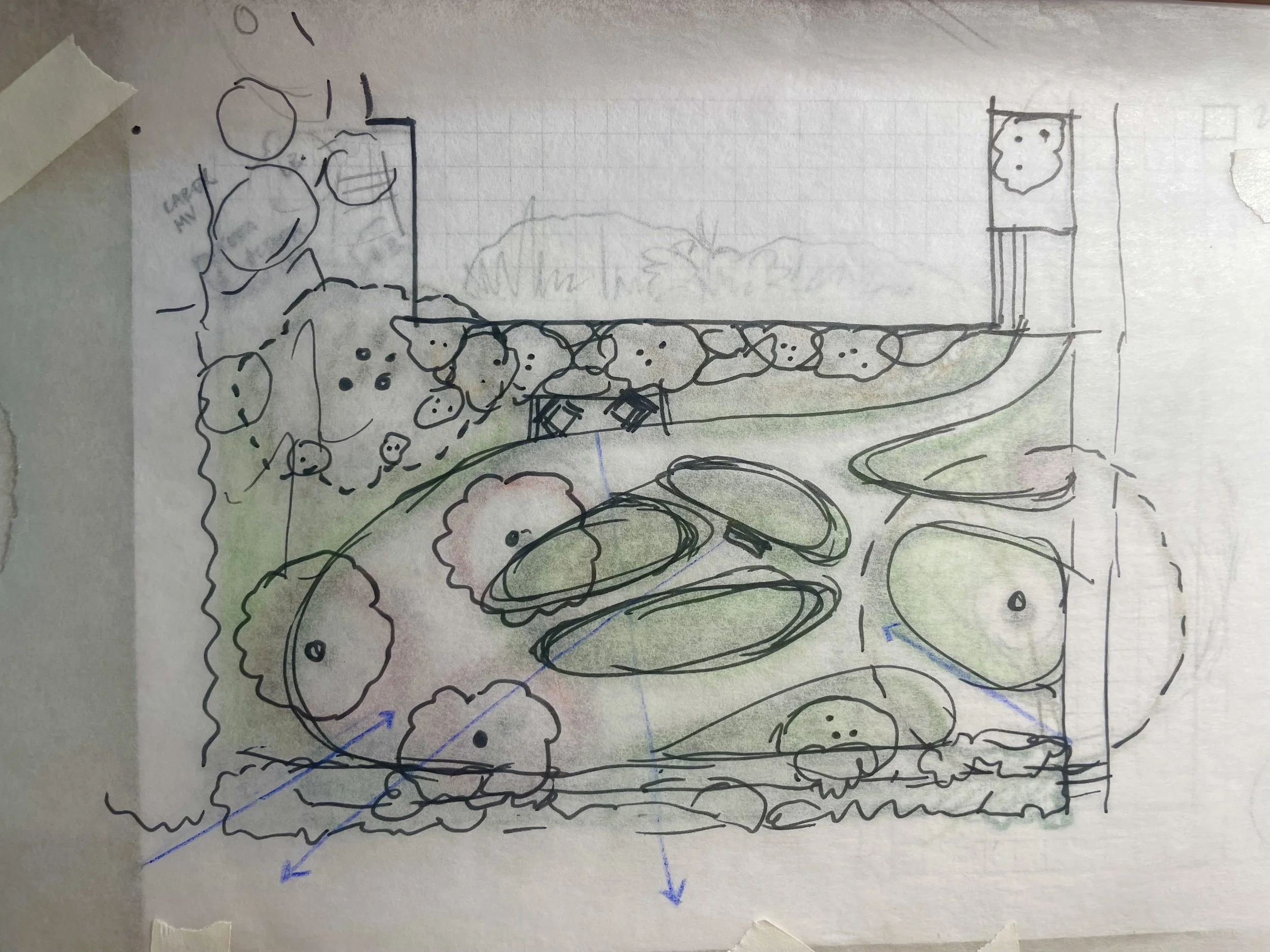
Site design: creating a spatial composition for an entire property or area to enhance daily living, deepen connections to nature, and encourage moments of reflection and celebration. I work with clients to shape outdoor spaces that are ecologically resilient and intuitively inviting: cohesive, sustainable landscapes that thrive, evolve, and enchant over time.
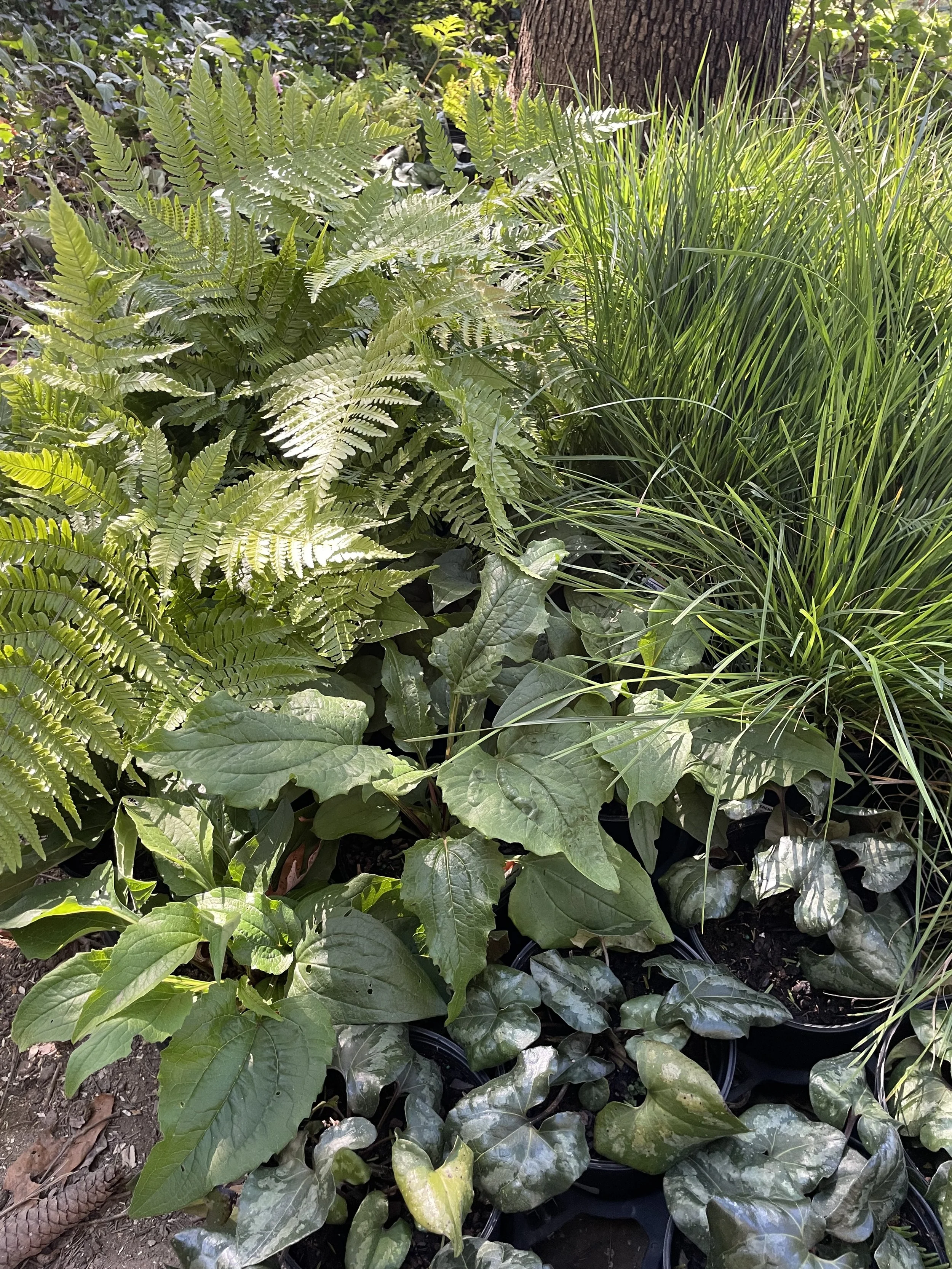
Native planting design: choosing the right species for the site, and arranging them artfully to create welcoming spaces, beautiful views, and vibrant habitat for people and native wildlife. Jewelweed’s planting project is collaborative: native plants grown in your garden will—once fully established and thriving—be used in Jewelweed’s floral designs in exchange for maintenance assistance. Clients become partners in native flower farming, strengthening a local floral economy while enjoying the beauty and ecological benefits of a native garden. Please understand that it takes years for native plants to establish to the point that flowers or branches could be harvested in any significant quantity without harming the plant or denying habitat resources to native wildlife. This project is envisioned as a long term native habitat restoration effort, with the added eventual benefit of floral design supply.
planting design: grow native florals
planting design
Grow with Jewelweed is an experiment in native floral farming and design
While local flower farmers grow a wide variety of sustainably cultivated cut flowers, most of these are non-native species. My hope is to expand the use of native species for floral design, and to that end, to establish a supply chain of native perennials to use (along with locally grown flowers) for design—species that strengthen the native ecosystem throughout their life cycles, and bring beauty and resiliency to our outdoor spaces.
How does it work?
You provide the space and conditions for native plants to grow
Jewelweed designs the plantings and supports their cultivation and care, and in return we harvest flowers and foliage for design.
Together, we create a decentralized native flower farm across Baltimore City, and a demonstration project on the possibilities of high-end floral design with native plants.
Benefits of native species
Adapted to thrive in Maryland’s climate, they require less water and less maintenance than non-native species, and little to no soil amendment.
They provide habitat for native wildlife, including birds and beneficial insects
Their deep root systems effectively capture rainwater and allow it to percolate into the soil, reducing runoff to local waterways.
What can a native flower garden look like? See this list of native species that I value highly for floral design and would love to cultivate with you! I’m also always open to ideas and (educated) experimentation.
site design
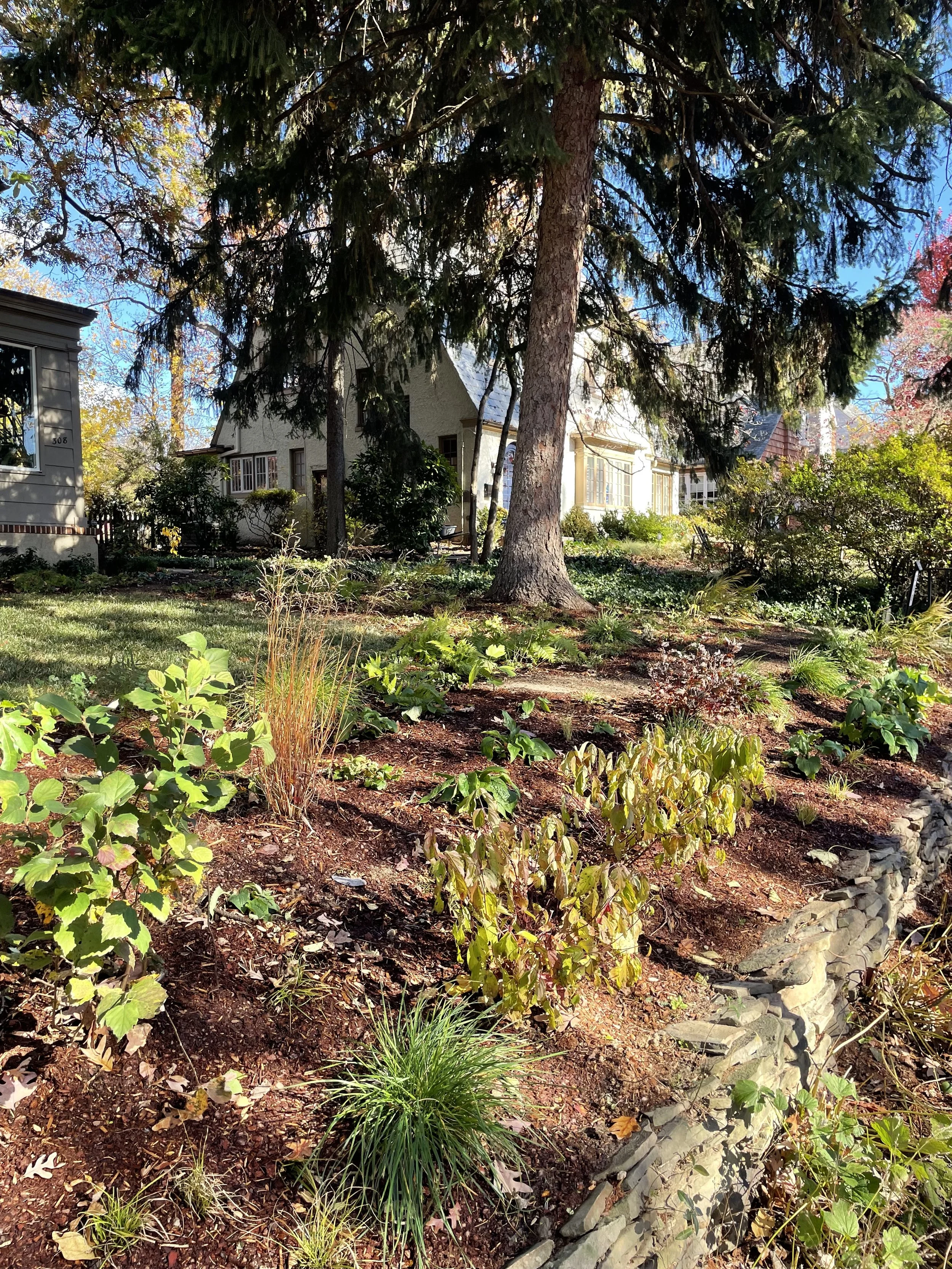
Graceful, site-appropriate outdoor spaces can expand your living space beyond the walls of your home, and allow rich connections to the native plants and wildlife of our region.
Site planning considerations include: views and sight-lines, privacy and social connections, functional zones and spatial sequences, seasonal transformation, active uses, pathways and access, and so on.
A site vision plan may include a materials palette for pathways, paving, furnishings, and lighting.
Depending on your situation, you may want a standalone site plan to guide DIY efforts over time, or you may want the site plan to be the first step in a full design and construction process, including but not limited to planting design.